The woman at the center of a powerful colonial web
I picture Mary Bolling Fleming as a figure standing at the crossroads of three strong currents: the Bollings, the Kennons, and the Flemings. Her life belongs to early Virginia, where lineage was not a decorative detail but a kind of currency. Born in 1711 in Henrico County, she entered a world shaped by plantations, inherited status, and family alliances that could stretch for generations like roots beneath old oaks. She was not a public stateswoman or a battlefield commander. Her influence moved more quietly, through marriage, motherhood, and the continuation of a distinguished line.
Mary was the daughter of John Bolling and Mary Kennon Bolling. That alone places her in a family dense with colonial significance. Through the Bollings, she inherited a connection to Pocahontas. Through the Kennons, she entered another major Virginia household rooted in land and power. Her own name, Mary Bolling Fleming, carries that inheritance in full, as if several family histories were braided into one rope.
Her parents and the world that formed her
Her father, John Bolling, was a merchant, planter, militia officer, and prominent personality. His Virginia was shaped by tobacco wealth, landholding, and local control. Cobbs Plantation became a family pillar after he bought it in 1704. I view him as a patriarch and architect establishing a family that will last.
Her mother, Mary Kennon Bolling, was from another prominent Virginia line. Daughter of Richard Kennon and Elizabeth Worsham. After marrying John Bolling, their daughter Mary inherited two strong households. If John Bolling represented public status, Mary Kennon Bolling represented family continuity, the person who maintains the home and social fabric long enough for a dynasty to take hold.
Property, rank, and kinship were important to Mary Bolling Fleming’s upbringing. Her youth was undoubtedly filled with servants, plantations, and family commitments. The shape of her universe is clear without a diary. The house was inherited.
Marriage to John Fleming
On 20 January 1727, Mary Bolling married John Fleming. That date marks a turning point in her life, but it also marks another merger of Virginia families. John Fleming was a lawyer, planter, and later a prominent colonial figure. In eighteenth century Virginia, marriage was never only private. It was a bridge between estates, households, and reputations. Mary’s marriage joined the Bolling line to the Fleming line, and the result was a family that would remain visible in Virginia history long after her own death.
I think of this marriage as a hinge. Before it, Mary was the daughter of one important house. After it, she became the matriarch of another. The record does not preserve her voice in detail, but the consequences of her life are easier to see than the texture of her everyday hours. She helped anchor a family that would produce lawyers, soldiers, judges, and political men.
The children and the family line
Mary and John Fleming had a large family, and this is where her story becomes especially vivid. Their children carried the family forward into public life and private legacy. The names that appear most consistently are Mary Fleming, Thomas Fleming, William Fleming, John Fleming, Charles Fleming, and Caroline Fleming.
William Fleming is the most documented of the children. Born in 1736, he became a lawyer, legislator, continental officer, and later a judge. His career moved across the Revolutionary era like a steady river, carrying the family name into a new political age. Through him, the family entered the world of constitutional change and public office.
Thomas Fleming appears in family histories as a son who died at Princeton in 1777. That detail gives his life a sharp, brief edge. He belongs to the generation shaped by war and revolution, a generation in which family honor often met mortal risk.
John Fleming appears in the record with less consistency, and that uncertainty is itself revealing. Historical families are often stitched together from partial evidence, and not every child leaves the same shadow behind.
Charles Fleming is also named in genealogical sources, and Caroline Fleming appears in some family trees as a daughter who continued the line through marriage. Even when the records thin out, the shape remains clear. Mary Bolling Fleming was not a lone figure. She was the center of a widening family wheel.
Grandparents and the deeper ancestry
Mary’s grandparents place her inside one of the most famous descent lines in American colonial history. On her paternal side, Robert Bolling and Jane Rolfe connect her to the Rolfe and Pocahontas legacy. Robert Bolling was an immigrant Virginian who built wealth and status. Jane Rolfe, his wife, was the daughter of Thomas Rolfe and Jane Poythress. Through that line, Mary became part of the long memory of Pocahontas in American genealogy.
On her maternal side, Richard Kennon and Elizabeth Worsham give her another pillar of colonial family power. Richard Kennon was an early Virginia landholder associated with Conjurer’s Neck. Elizabeth Worsham Kennon came from another established family network. These grandparents mattered not only as names in a chart but as the kinds of people who helped create the social scaffolding of colonial Virginia.
I find the family structure almost architectural. Each generation is a beam. Mary Bolling Fleming stands where those beams meet.
Portrait, memory, and historical presence
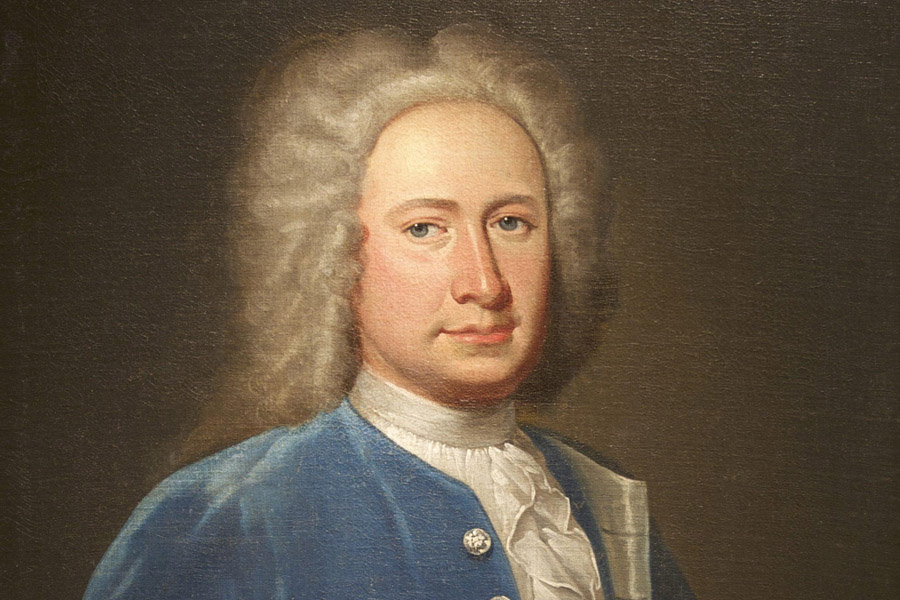
A Charles Bridges portrait from 1735 to 1745 commemorates Mary Bolling Fleming. Portraits can do what words can’t. Freezes presence. It says this person was worth preserving. Like her genealogy, her picture conveys rank and continuity.
Not all records situate her death in 1744 in Powhatan County. Colonial genealogy is full of paper traces that split, overlap, and contradict. The general outline remains. Before her death in the mid-18th century, she had shaped a family that would last for decades.
Why her story still matters
Mary Bolling Fleming matters because her life reveals how power worked in colonial Virginia. It did not always travel through office or oratory. Sometimes it traveled through marriage, inheritance, and the careful preservation of family standing. She was a daughter of one prominent line, a wife in another, and the mother of children who would move into law, politics, military service, and landholding.
I see her story as a woven cloth. The threads are family names, dates, estates, and descendants. The fabric is broader than any one person, but without her, it would have a gap. She represents the quiet continuity that holds a dynasty together.
FAQ
Who was Mary Bolling Fleming?
Mary Bolling Fleming was an eighteenth century Virginia woman born in 1711 in Henrico County. She belonged to the Bolling, Kennon, and Fleming families and is remembered as a key link in a prominent colonial lineage.
Who were Mary Bolling Fleming’s parents?
Her parents were John Bolling and Mary Kennon Bolling. Both came from respected Virginia families with strong ties to land, rank, and local influence.
Who did Mary Bolling Fleming marry?
She married John Fleming on 20 January 1727. Their marriage joined two important colonial families and produced a large family line.
How many children did she have?
The most consistently named children are Mary, Thomas, William, John, Charles, and Caroline Fleming. Some records describe the family as having eight children, though the documentation is not fully uniform.
Why is Mary Bolling Fleming historically important?
She is important because her family connects several major Virginia lines, including the Bollings, Kennons, and Rolfe descent through Pocahontas. Her descendants also played visible roles in law, politics, and military life.
Is Mary Bolling Fleming connected to Pocahontas?
Yes. Through her paternal line, Mary was descended from Robert Bolling and Jane Rolfe, and Jane Rolfe was the daughter of Thomas Rolfe and Pocahontas.
What is known about her life outside family history?
The surviving record is limited. She is best understood as a colonial Virginia gentlewoman, wife, mother, and family anchor rather than as a figure with a separate public career.
When did Mary Bolling Fleming die?
Most sources place her death in 1744 in Powhatan County, though some records give a different date. The exact date is not fully consistent across online genealogies.