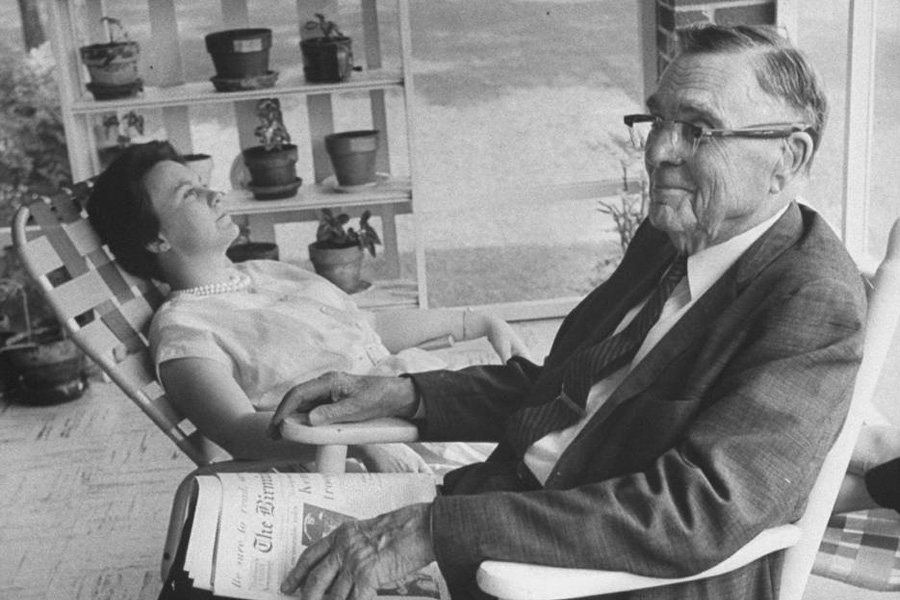
The Self Made Man from Georgiana
I have always been drawn to stories of quiet determination in small town America. Amasa Coleman Lee stands out as one such figure. Born on July 19 1880 in Georgiana Butler County Alabama he entered the world on a modest family farm. Limited resources marked his childhood. Yet he refused to stay rooted there. With only basic schooling he passed the Alabama teachers exam on his first try. That single achievement opened doors. He relocated to Monroe County where he taught school by day and kept books at the Flat Creek sawmill in Finchburg by night. Numbers and ledgers became his language. He even managed the small Manistee and Repton Railway a narrow gauge line that hauled logs through pine thickets. Those early jobs forged a practical mind one that valued precision over flash.
By his mid thirties Amasa Coleman Lee had already worn many hats. Teacher. Clerk. Railroad supervisor. Each role added layers to his character. He approached every task with the same steady hand. No college degree. No formal pedigree. Just grit and a sharp eye for details. This foundation prepared him for the leap into law. In 1915 after apprenticing under the firm Barnett and Bugg he passed the Alabama bar exam. At once he opened a practice in Monroeville. Civil cases filled his docket. Wills. Estates. Real estate titles. Bankruptcy filings during tough economic times. He soon became partner in what became known as Barnett Bugg and Lee. Clients trusted his straightforward style. He never chased headlines. He simply got the work done.
A Political Voice in the Statehouse
Politics called next. As a lifelong Democrat Amasa Coleman Lee won election to the Alabama House of Representatives for Monroe County in 1926. He served from 1927 until 1939 across three full four year terms. Sessions were part time so he balanced law and legislation without missing a beat. County roads schools and local taxes occupied much of his focus. He drafted rules that shaped bankruptcy procedures in the state during the Great Depression. Those contributions helped countless families keep their land. His legislative record reflected the values of rural Alabama: practical solutions over grand gestures. Numbers tell part of the story. Three terms. Twelve years of service. One man making steady progress in a changing South.
In 1929 he took on another role. He purchased the Monroe Journal the local weekly newspaper. For eighteen years until 1947 he owned and edited every issue. Pages brimmed with community notices legal summaries and town happenings. Under his watch the paper became a trusted voice. Readers turned to it for facts not opinions. His dual career as lawyer and publisher gave him unique insight. He understood both the letter of the law and the rhythm of daily life in Monroeville.
The Family That Anchored His World
Amasa Coleman Lee’s life revolved around family. He married Frances Cunningham Finch June 22, 1910. She brought steadiness and warmth. Monroeville became their home for four children. They established routine and calm strength at home. Despite declining health, Frances managed domestic affairs gracefully. She died of heart arrest on June 15, 1951, after cancer diagnosis. The loss hurt. Yet Amasa remained a single parent.
His parents showed resiliency. Father Cader Alexander Lee, born 1840 and died 1910, was a Confederate veteran before farming. Mother Theodosia Euphrasia Frances Windham Lee (1844–1933) oversaw the household during hard times. They shaped Amasa’s work ethic.
The kids took different paths. In 1911, Alice Finch Lee came. She stayed in Monroeville as a lawyer. She lived with her father after her mother died. They planned A.C. Lee and Daughters, but it never launched. Alice never married. She provided decades of support till 2014.
Frances Louise Lee was next in 1916. She married and raised a family privately. In Amasa’s view, her route was typical. Edwin Coleman Lee, born 1920, chose aviation. Pilot training, he died young in 1951 from a barracks aneurysm. The family suffered greatly after losing both wife and son in the same year.
The family’s literary star was youngest daughter Nelle Harper Lee, born April 28, 1926. Harper Lee, a famous writer, used Monroeville memories. Amasa quietly celebrated her triumph. Later in life, he signed copies of her Pulitzer Prize-winning novel as Atticus Finch, a reference to his doppelganger. Family bonds lasted. After 1951, Amasa sold the family house and moved in with Alice. He lived modestly until death.
Career Achievements That Shaped a Community
Amasa Coleman Lee’s professional life yielded lasting results. He argued over one thousand civil cases in his career. His 1919 court appointed defense of two Black men accused of murder stood out. Though the all white jury convicted them the effort highlighted his sense of duty. He focused afterward on everyday legal needs. Bankruptcy rules he helped craft aided farmers during the 1930s. Newspaper ownership amplified his reach. Eighteen years of editorials shaped local opinion on everything from road repairs to school funding. Financially he maintained stability. Modest income from law and publishing covered a comfortable home education for the children and later downsizing. No vast estate. No flashy investments. Just enough to sustain the family he cherished. Those achievements echo in Monroeville today through preserved records and community memory.
Key Dates That Defined His Journey
To grasp the full scope I compiled the milestones into a clear overview. Dates and numbers bring the story into focus.
| Year | Event |
|---|---|
| 1880 | Born July 19 in Georgiana Alabama |
| 1910 | Married Frances Cunningham Finch on June 22 |
| 1911 | Daughter Alice born |
| 1915 | Passed Alabama bar exam and began law practice |
| 1916 | Daughter Frances Louise born |
| 1919 | Defended high profile murder case |
| 1920 | Son Edwin born |
| 1926 | Elected to state legislature and daughter Nelle Harper born April 28 |
| 1927 | Began first term in Alabama House of Representatives |
| 1929 | Purchased and began editing the Monroe Journal |
| 1939 | Completed final legislative term |
| 1947 | Sold the newspaper after eighteen years |
| 1951 | Wife Frances and son Edwin both died |
| 1962 | Died April 15 at age 81 in Monroeville |
The Literary Echo That Outlasted Him
Amasa Coleman Lee never desired celebrity. But his life inspired one of the 20th century’s most beloved personalities. Harper Lee portrayed Atticus Finch’s courtroom dignity and morality. Real-life details varied. Atticus defended a client in a racially contentious trial with a different outcome. But the essence remained. A small-town temperament characterized father and daughter. Amasa saw the 1960 novel’s release. Two years later, on Palm Sunday 1962, he died. Monroeville’s Hillcrest Cemetery hosted burial. A subtle symbol of the relationship, his pocket watch accompanied Gregory Peck to the 1963 Academy Awards. The stories are passed down to grandkids and great-grandchildren.
Exhaustive Family Relationships at a Glance
Beyond the nuclear circle extended ties trace through Alabama roots. Amasa’s parents linked to earlier Lee and Windham farming lines. No remarriages or additional partners appear in records. The four children produced their own branches. Alice remained single. Frances Louise built a married household. Edwin left no descendants noted. Harper Lee’s private life stayed out of the spotlight yet her writings immortalized the family spirit. In total the immediate circle numbered six core members across two generations. Their relationships formed a tight weave of support duty and shared history.
FAQ
How many children did Amasa Coleman Lee raise and what were their names?
He raised four children. They were Alice Finch Lee born 1911 Frances Louise Lee born 1916 Edwin Coleman Lee born 1920 and Nelle Harper Lee born 1926. Each played a unique role in the family dynamic.
What was Amasa Coleman Lee’s most notable courtroom moment?
In 1919 he defended two Black men a father and son in a murder trial. The case tested his early legal skills and later drew comparisons to themes in his daughter’s novel.
When and where did Amasa Coleman Lee die?
He died on April 15 1962 in Monroeville Alabama at the age of 81. He is buried in Hillcrest Cemetery there.
Did Amasa Coleman Lee attend law school?
No. He read law through apprenticeship and passed the bar exam in 1915 without any college degree. His path highlighted self reliance.
How long did Amasa Coleman Lee own and edit the local newspaper?
He owned and edited the Monroe Journal from 1929 until 1947 a span of eighteen years that shaped community news in Monroe County.
What political office did Amasa Coleman Lee hold and for how many years?
He served in the Alabama House of Representatives for Monroe County from 1927 until 1939 across three four year terms totaling twelve years.
How did Amasa Coleman Lee’s family life change after 1951?
After losing his wife and son in 1951 he sold the family home and moved in with daughter Alice. They planned a law partnership that reflected their close bond.