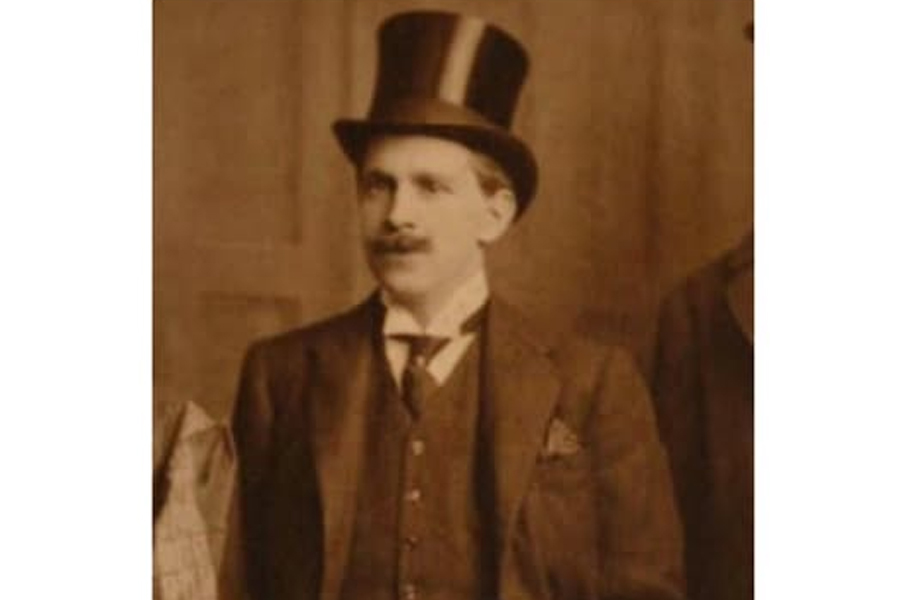
A life built like a stage trick
I think Horace De Vere Cole belongs to that rare breed of people who seem less like ordinary men and more like a spark dropped into a powder room. Born in 1881 in County Cork, he moved through the world with the confidence of someone who treated public life as a theatrical set. He was not merely mischievous. He was inventive, stubborn, and allergic to solemnity. His name still clings to the great age of hoaxes because he turned deception into performance art, and performance art into social critique.
He came from wealth, but money never made him obedient. His family background gave him access to country houses, schoolrooms, and elite circles, yet he kept reaching for disruption instead of comfort. That tension shaped everything about him. He could have lived quietly on inherited fortune. Instead, he chose to become a practical joker of unusual scale, a man who made institutions look foolish by borrowing their own respectability.
Early years, war service, and Cambridge
Horace de Vere Cole was born in 1881 into an Anglo Irish family with roots and status. His father, Major William Utting Cole, served in the 3rd Dragoon Guards, and his mother, Mary de Vere, connected him to an old Irish lineage. His childhood was marked by loss. His father died of cholera in India when Horace was still young, a hard break that seems to have sharpened the edges of his later life. He also suffered diphtheria around the age of ten, and that illness affected his hearing for the rest of his life.
He went to Eton and then to Trinity College, Cambridge, though he did not follow a conventional academic path. Before and during his university years, he had already begun to show his taste for elaborate misrule. In 1900, he served in the Second Boer War as a cavalry officer and was wounded. That war service gave him a patina of seriousness, but he wore seriousness like a borrowed coat. The fit was never perfect.
At Cambridge, he became part of a world that rewarded wit, nerve, and display. Those were exactly his native elements. He understood that the right costume, the right accent, and the right assumption could unlock almost any door. He made that insight into a lifelong method.
The hoax as an art form
Famous exploits by Horace De Vere Cole blurred the boundary between humor and social experiment. The 1910 Dreadnought hoax, in which he and a number of collaborators impersonated the Emperor of Abyssinia and his entourage and deceived the Royal Navy into greeting them with ceremony, was the most notable. The prank was more than funny. Authority blinked at the mirror.
He has already tested popular gullibility. Another theatrical deception, the Cambridge Sultan of Zanzibar hoax in 1905, showed how rank and costume may pass for truth. He repeated his ridicule in subsequent occasions, including the 1919 Venice manure hoax. They were not random jokes. Each situation was carefully constructed, exploiting vanity as its weak point.
His use of embarrassment as criticism attracted me. He wrote no power essays. His ostentatious displays of authority were absurd. That knife cuts better than argument.
Money, property, and the fall from comfort
Horace’s finances followed a dramatic arc. He inherited West Woodhay House in 1906, but the estate proved too costly to keep. By 1912, he sold it, unable to sustain the burdens of the property. Later, he also lost money through Canadian land speculation. The man who once moved through elite society with such glittering ease ended his life in far less secure circumstances, dying in Honfleur, France, in 1936.
There is something almost Shakespearean in that financial drift. He began with the old architecture of privilege, but his life kept peeling away the wallpaper. He spent money, lost money, and finally outlived the polish of his class.
The family members who shaped his story
Horace’s family is not a side note. It is the frame around the portrait.
| Family member | Relationship to Horace | Notes |
|---|---|---|
| William Utting Cole | Father | Major in the 3rd Dragoon Guards, died in India from cholera |
| Mary de Vere | Mother | Irish mother from a family linked to the de Vere line |
| Anne de Vere Cole, later Anne Chamberlain | Sister | Married Neville Chamberlain in 1911 |
| John James Burke Cole | Brother | Younger brother, later a military officer |
| Denise Ann Marie Jose Lynch Daly | First wife | Married Horace in Dublin in 1918, divorced in 1928 |
| Valerie Cole | Daughter | Child of Horace and Denise |
| Mabel Winifred Mary Wright, later Mavis Wheeler | Second wife | Married Horace in 1931 |
| Tristan de Vere Cole | Son | Born in 1935, later a television director |
His father’s death seems important because it leaves a gap in the family story, a silence that Horace may have filled with performance. His mother, Mary de Vere, carried a noble historical scent in the family name. That old name mattered. It gave Horace social texture, and perhaps an instinct that identity itself could be staged.
His sister Anne became Anne Chamberlain after marrying Neville Chamberlain, who later rose to the highest political office in Britain. That link places Horace near the center of public history, even when he was trying to stand at its edges with a grin. His brother John James Burke Cole also entered military life, which shows how different the siblings could be. One brother marched through institutions, while Horace kept circling them with a box of matches.
Marriages, children, and the private life beneath the prankster
Two marriages for Horace. Denise Lynch, his first wife, married him in 1918. She was an Irish heiress and ward of the Irish Chancery. Their marriage had one daughter, Valerie Cole, but ended. In 1928, they divorce.
His 1931 second marriage was to Mavis Wheeler, née Mabel Winifred Mary Wright. Her life was remarkable. She started in service before becoming a model and social icon, giving their marriage a dramatic contrast. Tristan de Vere Cole, their 1935 son, was born. Tristan became a television director, and family legend may have linked him to Augustus John, his biological father. That detail makes the family saga resemble a Roman tapestry with intertwined strands.
Marriage did not eliminate mischief for Horace, but it humanized the legend. Pranks were a way for a husband and father to manage status, inheritance, and closeness in a life that often favored comedy.
How I read his legacy
I see Horace De Vere Cole as a man who understood that society depends on shared assumptions. If the right uniform, title, or accent could move a room, then those signals were more fragile than they appeared. He exploited that fragility with a grin. That is why he still matters. He was a jester, yes, but also a diagnostician. He exposed the hidden hinges in polite life.
FAQ
Who was Horace De Vere Cole?
Horace De Vere Cole was an Anglo Irish prankster, hoaxer, and social satirist born in 1881. He became famous for elaborate public deceits, especially the Dreadnought hoax of 1910.
What was his most famous prank?
His most famous prank was the Dreadnought hoax, when he and accomplices disguised themselves and tricked the Royal Navy into giving them an official reception.
Who were his parents?
His father was Major William Utting Cole. His mother was Mary de Vere.
Did Horace De Vere Cole have siblings?
Yes. His sister was Anne de Vere Cole, later Anne Chamberlain, and his brother was John James Burke Cole.
How many times was he married?
He was married twice. His first wife was Denise Ann Marie Jose Lynch Daly, and his second wife was Mabel Winifred Mary Wright, later Mavis Wheeler.
Did he have children?
Yes. He had a daughter, Valerie Cole, with Denise, and a son, Tristan de Vere Cole, with Mabel.
What happened to his fortune?
He inherited West Woodhay House in 1906, but sold it in 1912 because he could not afford the upkeep. He later lost money in Canadian land speculation and died in relative poverty in France.
When did he die?
He died in 1936 in Honfleur, France.